© Jérémie Léon for The Architectural Review
© Jérémie Léon for The Architectural Review
© Jérémie Léon for The Architectural Review
© Jérémie Léon for The Architectural Review
© Jérémie Léon for The Architectural Review
© Jérémie Léon for The Architectural Review
© Jérémie Léon for The Architectural Review
© Jérémie Léon for The Architectural Review
© Jérémie Léon for The Architectural Review
© Jérémie Léon for The Architectural Review
© Jérémie Léon for The Architectural Review
© Jérémie Léon for The Architectural Review
© Jérémie Léon for The Architectural Review
Château de Beaucastel
Text by Eleanor Beaumont
The Architectural Review 1515
October 2024
The ground holds materials that have been used to construct buildings for millennia. These materials are often found in different strata from across geological time, from stone to sand to clay. But there is a more recent layer that can also be mined for construction: the layer of concrete that now covers large areas of the planet’s land mass.
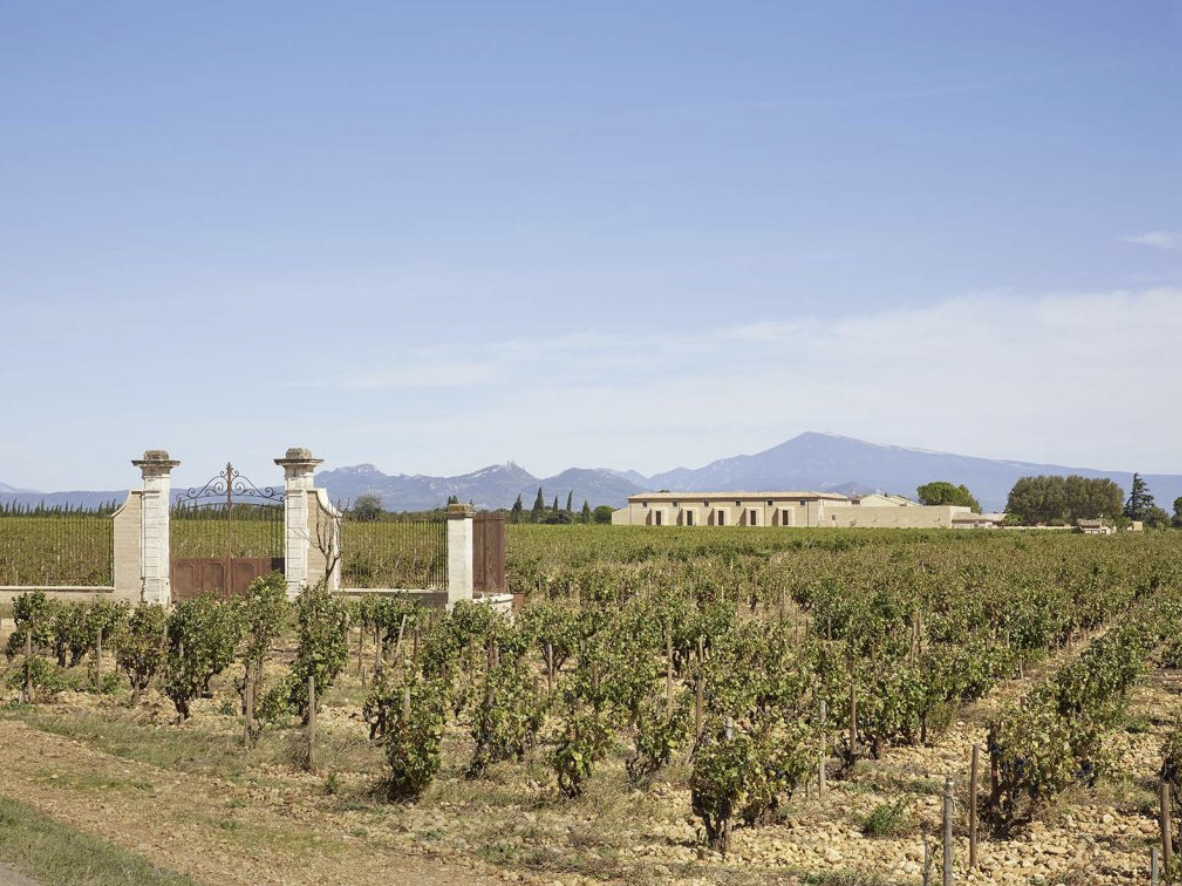
In the ground of the Château de Beaucastel vineyard in the Châteauneuf‑du‑Pape region of southern France, layers of clay, sand and pebbles at various depths document each time the Mediterranean Sea flooded the region during the Miocene period around 10 million years ago, or the Rhône changed course during the Pliocene about five million years ago, snaking across the valley depositing its alluvial sediments. Large round pebbles, smoothed by thousands of years knocking around what was a riverbed, cover the ground’s surface. Their thermal inertia, releasing the heat from the day overnight, is considered critical to the prized wine produced in the region.
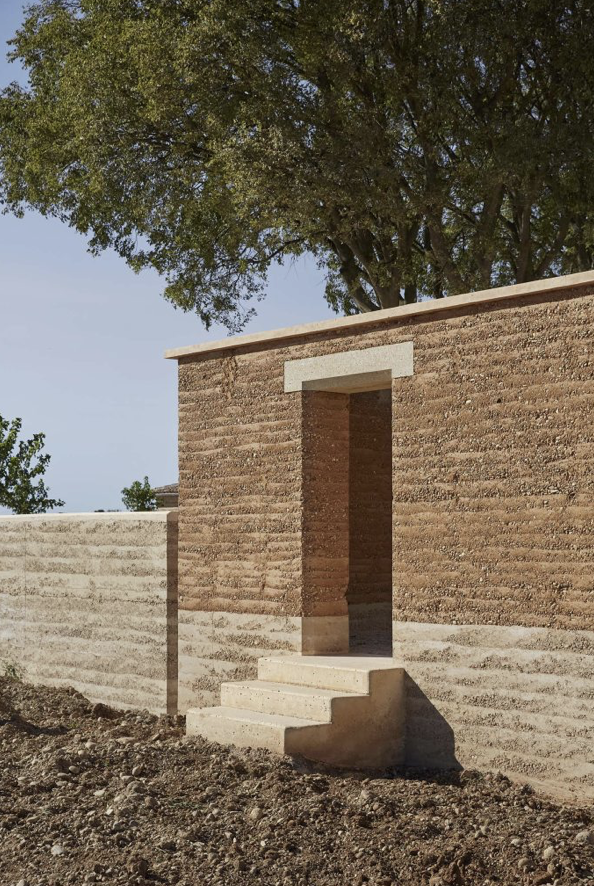
During their initial investigations on‑site, the architects of the winery’s new extension, Studio Méditerranée and Studio Mumbai, hoped to find enough clay and gravelly sand in the ground to construct around half of the project out of rammed earth (known as pisé in French) and the other half out of what they call béton de site, or ‘site concrete’. The project is described by head of Studio Mumbai Bijoy Jain as a balanced ‘displacement’; the material excavated to make room for large underground cellars and water reservoirs has been used to create the buildings above ground. When this excavation did not produce enough clay and gravelly sand for the original plan, instead containing large amounts of silt, the design was adjusted so that around a quarter of the project was constructed out of rammed earth and the rest of rammed concrete. The concrete mix was also modified – some of the demolished concrete structures were crushed and added to complete the formula.
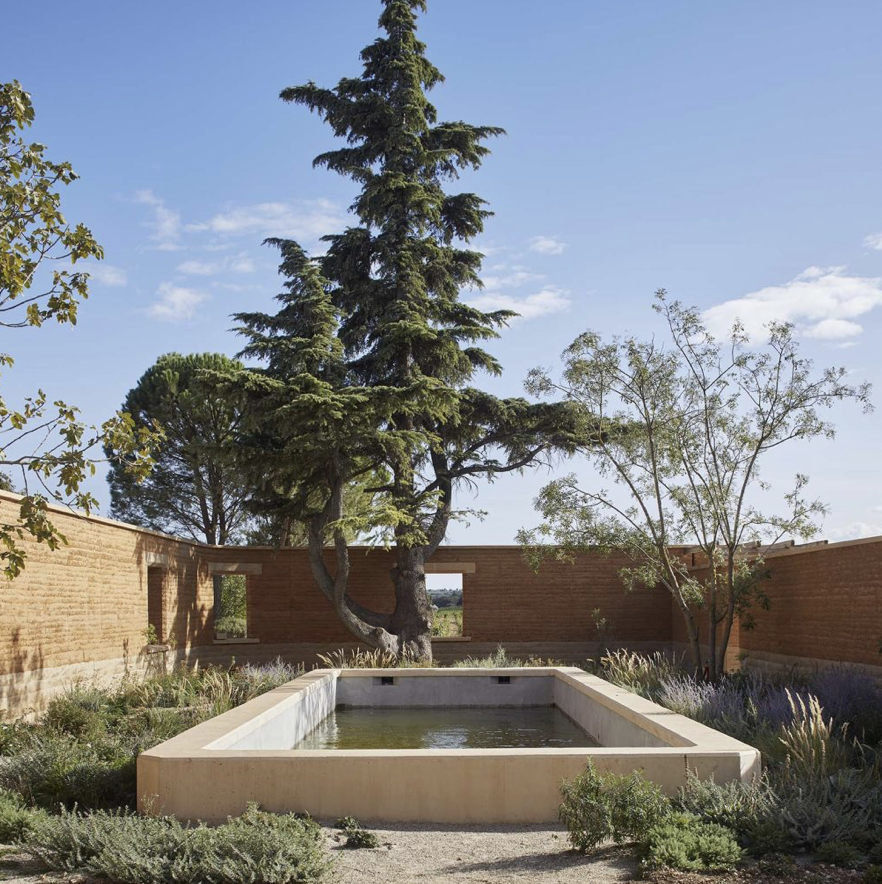
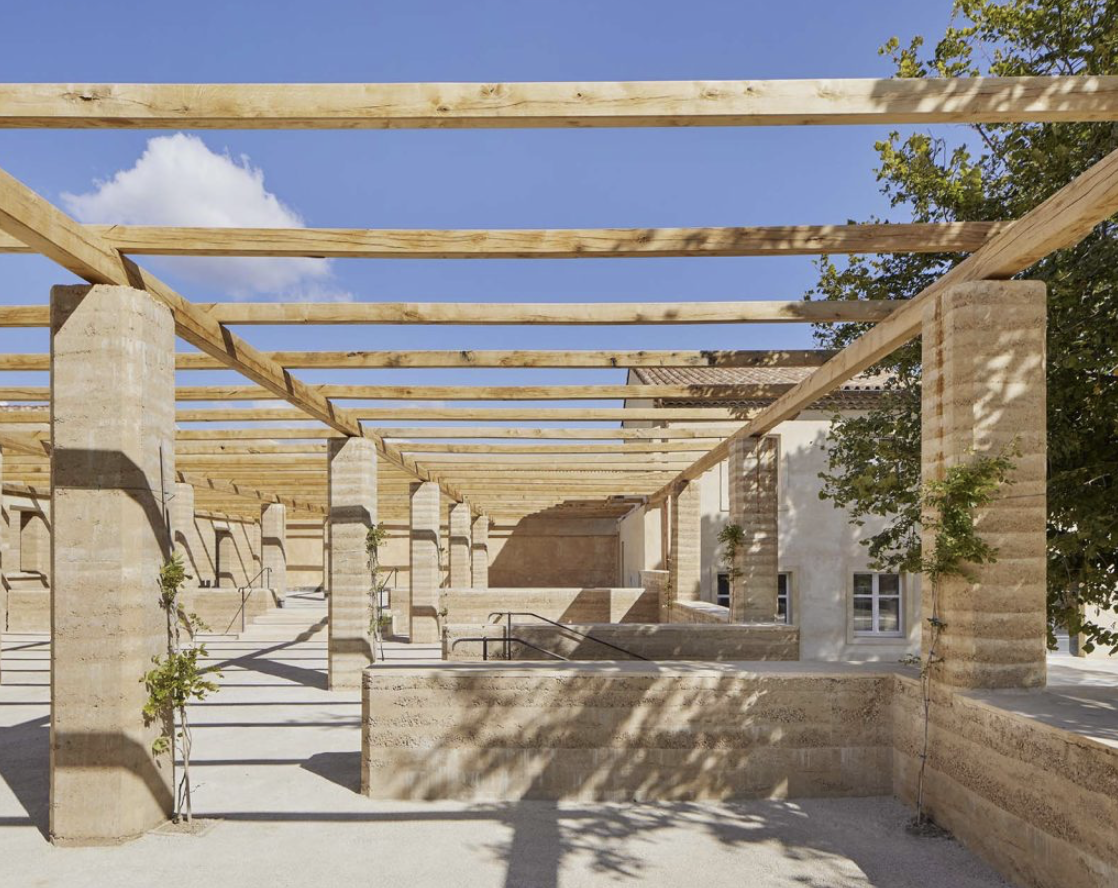
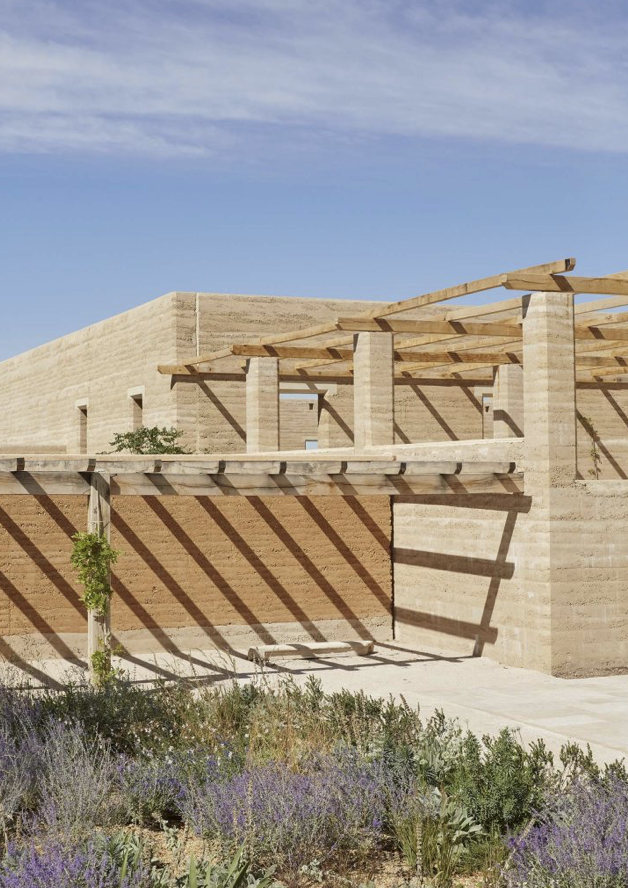
As a result, only a small amount of the 24,000m3 of material excavated from the ground had to be discarded. Rammed earth, without lime or cement, was suitable for the single‑storey walls of the guesthouse in the south‑eastern corner of the site as well as walls that enclose the gardens. Site concrete made with lime – manufactured at 900°C rather than cement’s 1,200°C and which absorbs CO2 as it hardens – was used in most of the rammed concrete walls; in the underground cellars, however, the structural loads required so much lime in the concrete mix that cement, sourced locally, proved to be the less carbon intensive option. The large reservoir tanks, on the other hand, are constructed from entirely new concrete, rather than any site‑sourced aggregates, as they had to be waterproof.
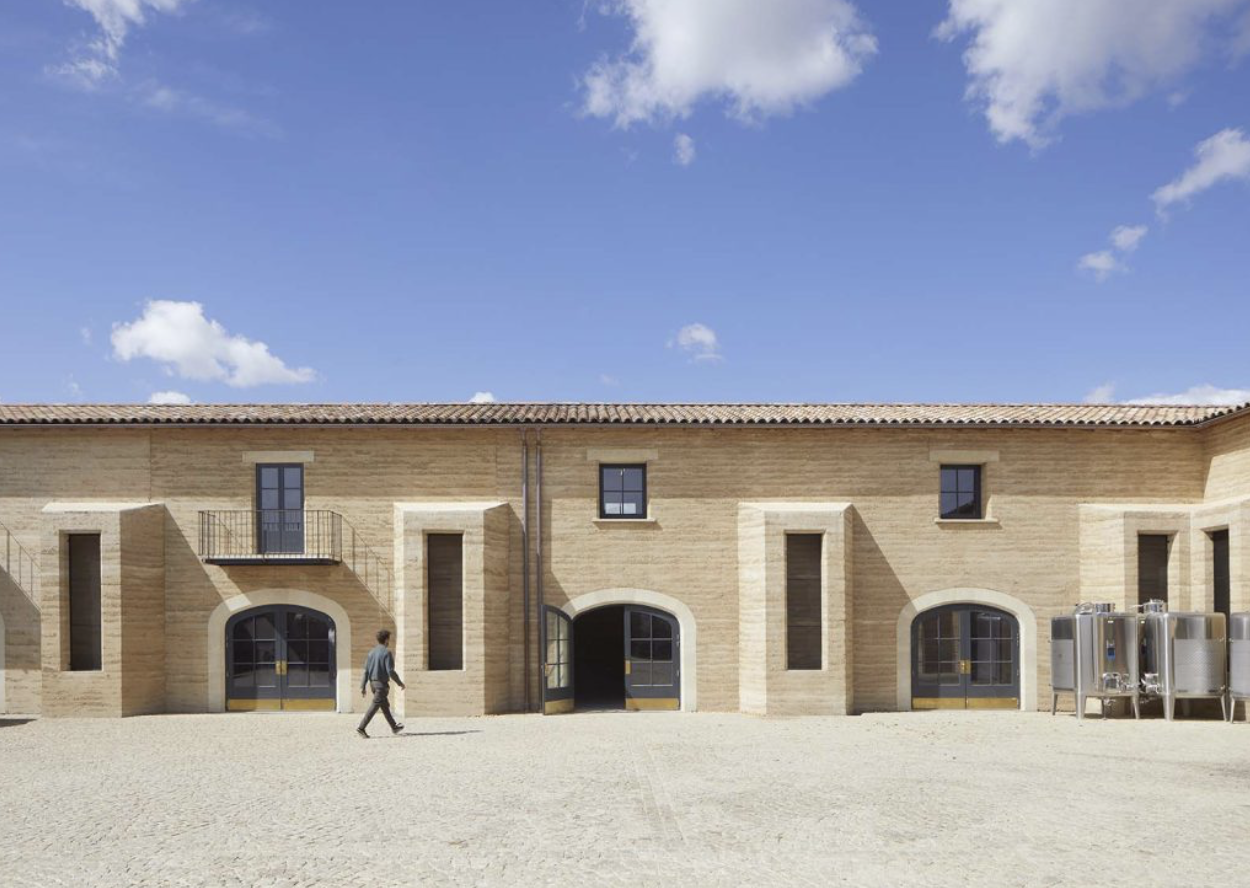
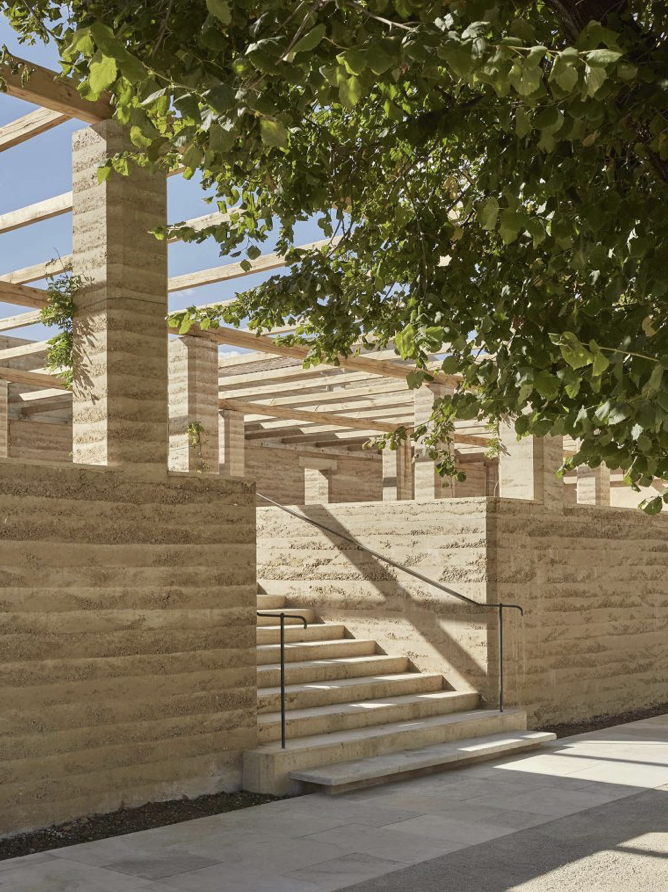
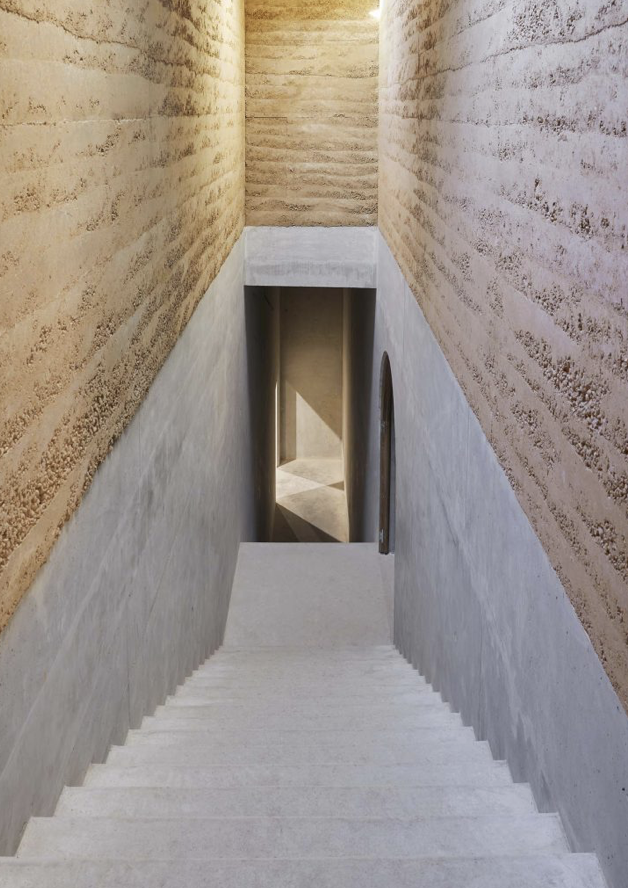
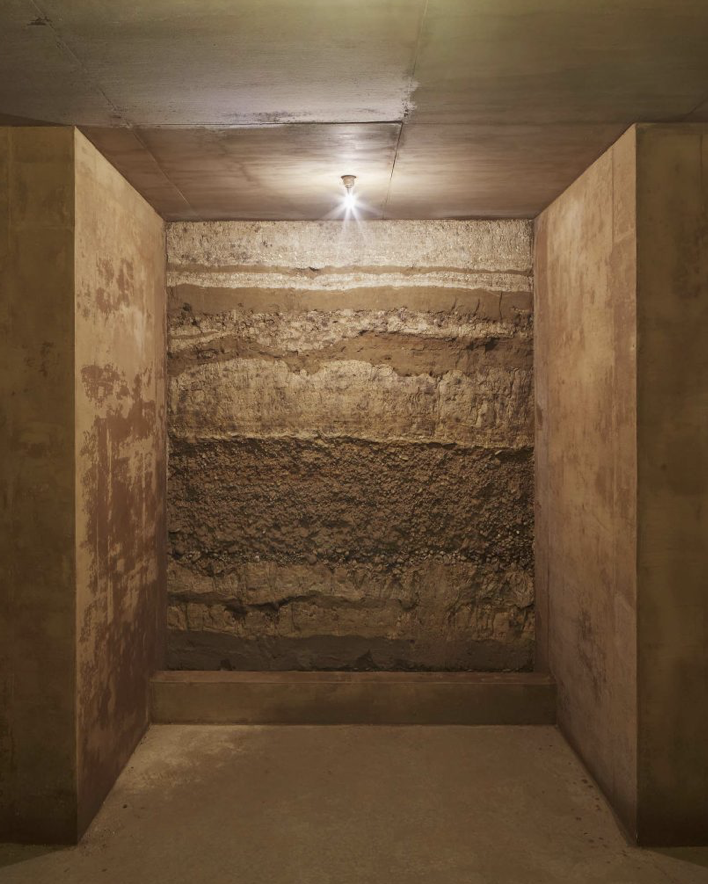
The walls made with site material have the colour and texture of the ground around them – a rich russet in the pisé, a dustier biscuit in the site concrete. There is resonance with the winemaking notion of terroir, referring to the specificity of a vineyard’s environment – its geology, topography, climate, even its biosphere – and the impact on a wine’s character. The importance of terroir to Château de Beaucastel’s winemaking process, in particular the site’s geology, is showcased in an underground chamber, where a slice of concrete wall is removed to reveal the strata of clay, sand, silt and limestone, like delicately stacked layers of chocolate patisserie. Many winemakers argue that terroir concerns human interventions as much as natural conditions – pruning, training, which varieties are grown where. This building is similarly inflected, indiscriminately expressive of both pre‑human ground and human‑made layers. After all, concrete is the geology of the anthropocene.
The local geology and mild climate have been exploited for wine production intermittently over the last 2,000 years. The vineyards of Château de Beaucastel and its associated winemaking company have been owned by the Perrin family since 1909. Foreshadowing the emerging fashion for natural wines, they were one of the first wineries to become organic in 1950, then biodynamic in 1974, and the grapes are picked by hand, as dictated by Châteauneuf‑du‑Pape appellation rules. But this does not mean this wine is not big business: the vineyards stretch over a square kilometre and produce around 300,000 bottles a year, many of them costing hundreds of euros.
In 2018, the family decided to enlarge and reconfigure the site at Château de Beaucastel. Arranged around the manor house built on land bought by Pierre de Beaucastel in the 16th century, the manufacturing and storage facilities that had accumulated over the previous hundred years were no longer fit for purpose. The family enlisted the start‑up Because Architecture Matters to organise an international competition, emphasising a need to meet ‘the challenges of the coming decades in terms of production and climate change’. The competition attracted 1,200 entries from around the world; in a shortlist that included Shigeru Ban, Rudy Ricciotti and John Pawson, among others, Studio Mumbai and Studio Méditerranée, headed by Jain’s former employee Louis‑Antoine Grégo, were selected for the project.
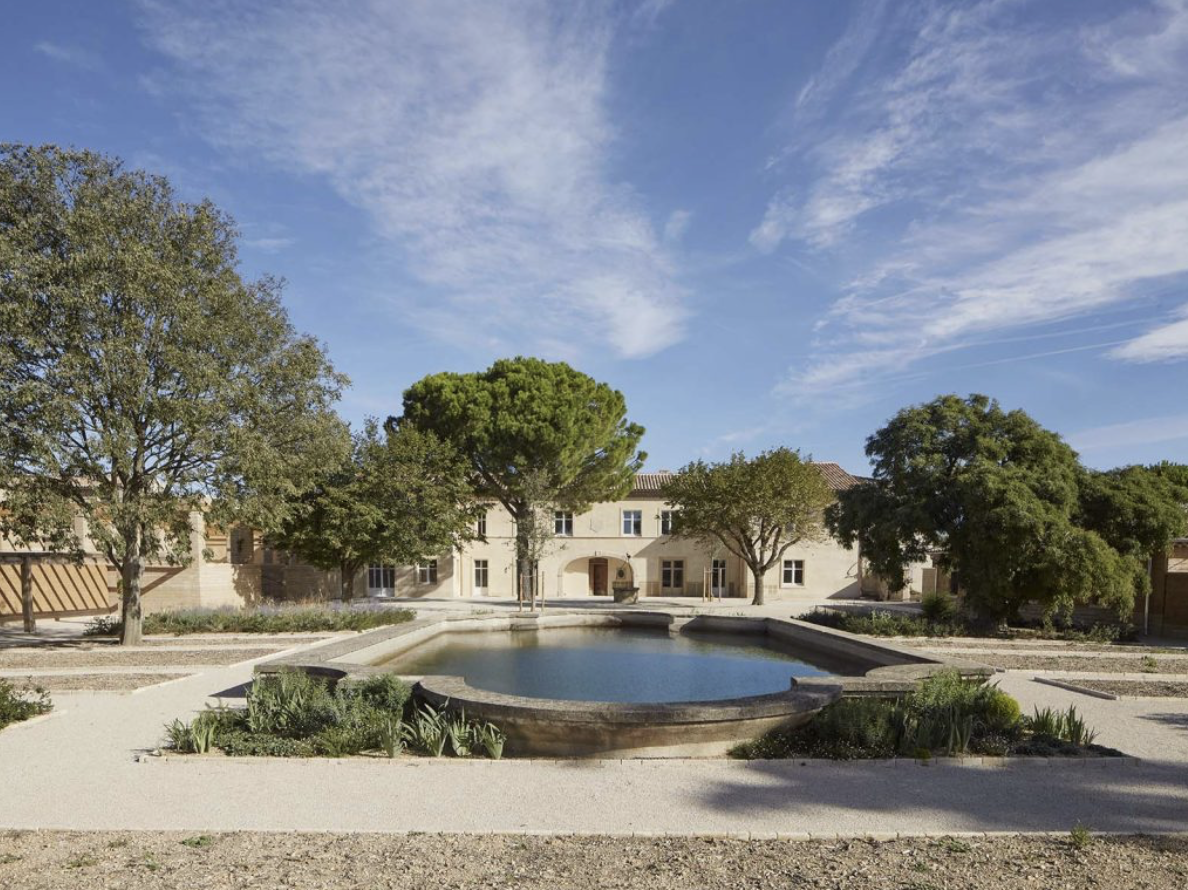
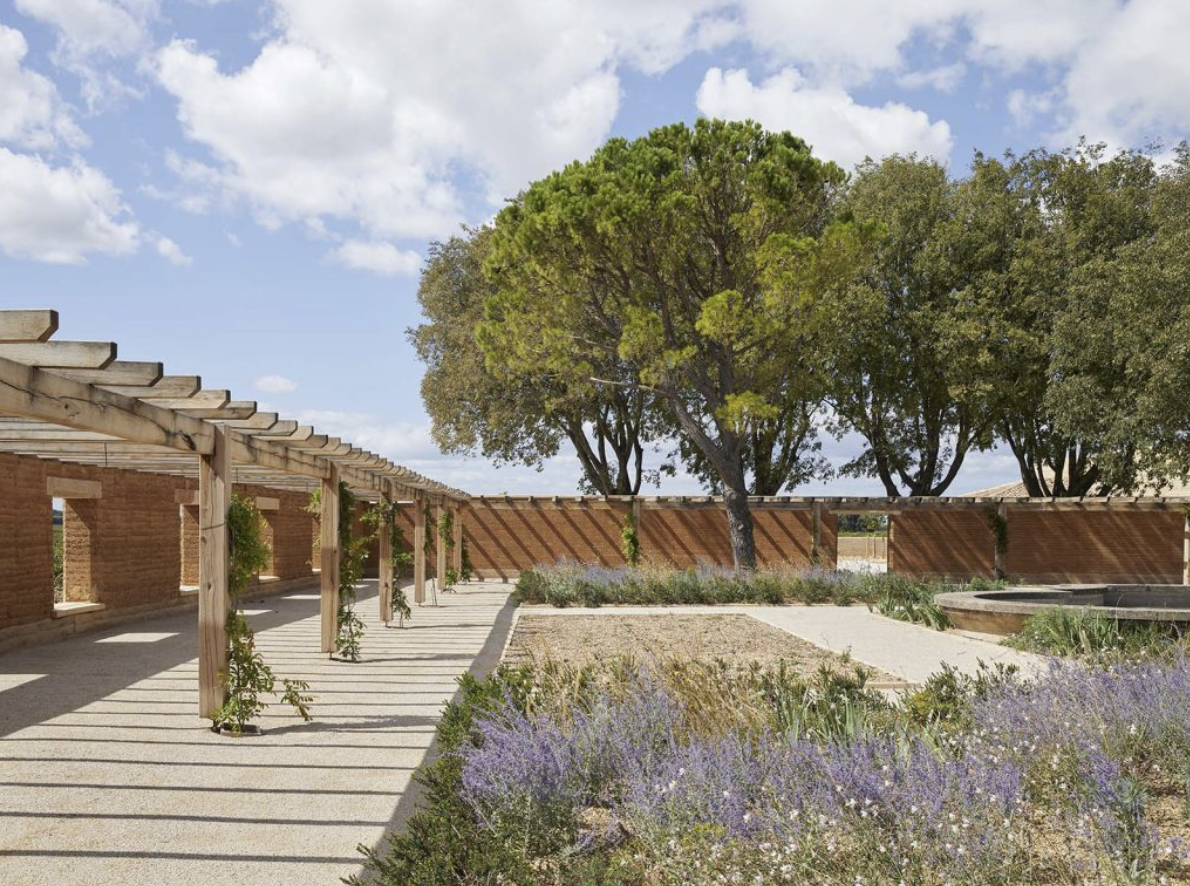
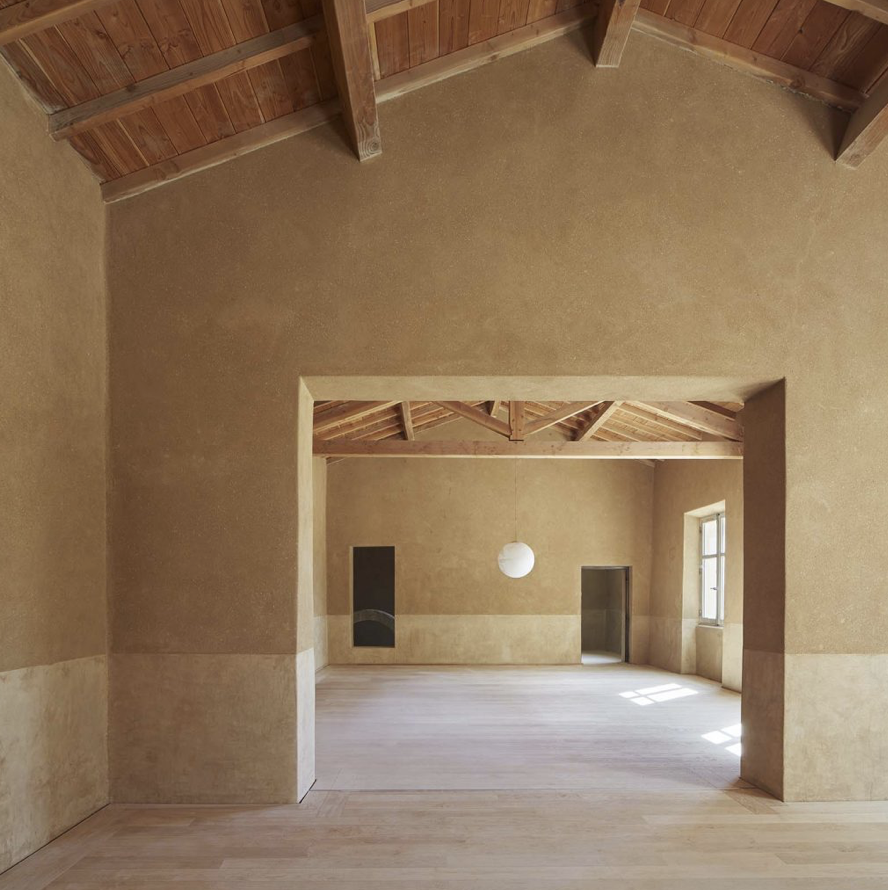
The family’s ambition was to futureproof and expand the winemaking facility as well as better welcome the public. From the small car park in the south‑western corner of the site, visitors pass through a walled garden, the pisé walls punctured with openings that frame views of the vineyards beyond. They are invited to wander in the shade of timber pergolas or around the garden laid out around a pre‑existing pool, before gathering in the restored and reconfigured manor house. Internally, the walls have been plastered with a mix of hemp, lime and earth from the site, but chunks of the original stone structure remain visible, and a new exposed timber‑trussed roof replaces the old.
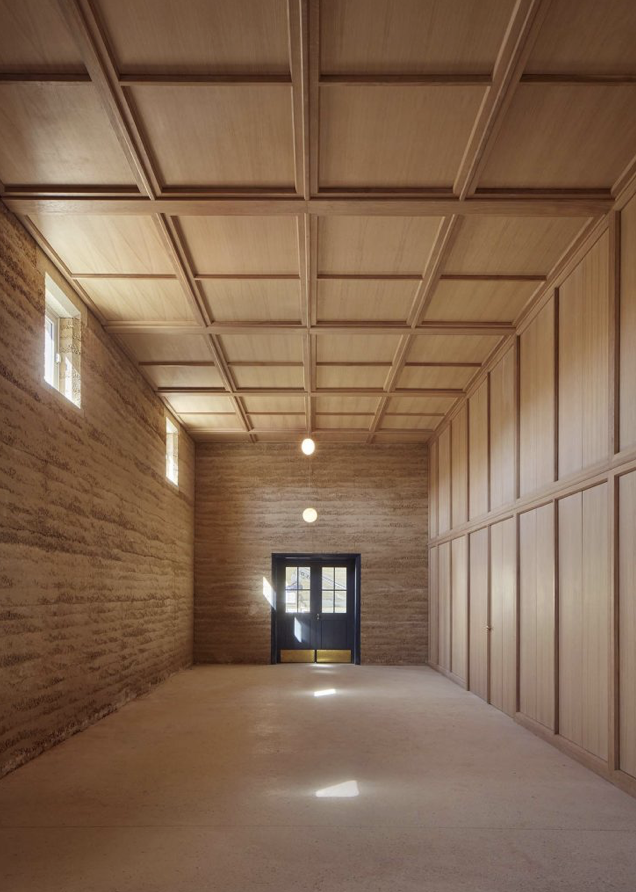
Primarily, however, this is an operational factory. The productive spaces – for storing, sorting and processing harvested grapes, fermenting and ageing the wine in barrels and vats, and bottling and labelling – are housed in large volumes organised around a working courtyard to the north‑west of the site, with lorries and tractors circling in and out. The architecture is robust and muscular, albeit more monastic than industrial. A new oak‑panelled hall acts as the hinge between the existing and the new, connecting to the preserved winery behind the manor house.
The visible buildings sit on a two‑storey raft of underground cellars and reservoirs, like a rammed concrete iceberg. A ring of cloister‑like vaulted cellars, intended for public visits, are supplemented by a warehouse beneath the courtyard, exploiting the natural coolth of the ground. But it is the water reservoirs that are described by the architects as ‘the heart of the building’. Rainfall is steadily reducing in the region due to global heating, and water scarcity is increasingly common. In 2021, irrigation of vines under extreme conditions was allowed for the first time under the Châteauneuf‑du‑Pape appellation since its founding in 1936. Over 800 litres of water can be required to produce a litre of wine, the majority needed for cleaning – though, according to the Perrins, at Château de Beaucastel it is just seven litres, as the vines are not irrigated. The underground reservoirs contain 1,800m3 of harvested, filtered rainwater that can be used for cleaning and other non‑potable uses while drinking water is sourced from the mains.
The powerful mistral winds, which blow one day in every three across the region, are harnessed in wind towers built into the facades, funnelling the breezes below ground and across the reservoirs to cool them. This air is then circulated around the cellars, which are kept at 14–15°C. Air‑conditioning units are installed in places, primarily for the few weeks a year where the temperature drops little overnight, but use this cool harvested water to reduce the mechanical load and are powered by solar energy produced on‑site. Above ground, the thick rammed concrete walls maintain a cool internal temperature, even during my visit at the height of summer.
This quietly ecological approach extends to use of local timber and stone lintels from a nearby quarry. The demolished buildings were not only recycled in the site concrete; wooden beams were used to make furniture, windows and doors, and tiles were either reused elsewhere in the project or crushed for use in the landscaping. The gardens, designed by British landscape studio Tom Stuart‑Smith, consist of local plants capable of withstanding drought conditions.
The notion of ‘sustainability’, however, is not in Jain’s vocabulary, and Grégo writes that ‘there is no distinction between an “ecological architect” and any other architect’. The commitment to using what is at hand, by hand, is intrinsic to the work of both studios. Studio Mumbai’s Ganga Maki textile studio in Bhogpur in India, for example, was built of local bricks and low‑carbon materials such as bamboo, earth and stone, with no mention of ‘embodied carbon’. Jain prefers to consider the contemporary notion of sustainability in more primordial terms: ‘Output must far exceed input. It is simple maths.’
Currently, Château de Beaucastel is a place where wine is made, but any number of uses could feasibly fill its rooms in the future. ‘Build for time, including an evolution of civilisation,’ Jain says. ‘Time is a material.’ Designing for and with time, with centuries – rather than just the end of the decade – in mind is equally integral to a (whisper it) sustainable architecture. The resources used in a building are precious; the building should therefore be useful for as long as possible.
This aphoristic approach to the ecological impact of architecture is compelling and refreshing, free of acronyms and buzzwords, and is not symptomatic of a lack of rigour; Grégo has meticulously documented and analysed the construction process and use of materials. A number for the building’s embodied carbon, however, is not forthcoming. There is a lot of concrete here, regardless of the local origins of its constituent parts, even if cement was replaced by lime where possible. Local stone would have been a lower carbon choice, though, as Grégo points out, this would have failed to deal with the large amount of excavated material and been expensive – the project had a ‘lean budget’ in Jain’s words, currently standing around €14 million.
Though somewhat coy about the notion of sustainability, Jain is less ambiguous about the reality of the climate emergency. ‘We must change course,’ he insists. But he is also optimistic about the course the planet will take: ‘We are not yet at the end. I have trust, and trust provides possibility.’ To date, the work of Studio Mumbai has largely been limited to wealthy clients and rarefied programmes, which the winery does little to counter – though the project does exhibit Studio Mumbai’s approach at a large scale, and promises ambitious evolution through the work of its progeny Studio Méditerranée. Grégo explains he is interested in applying their approach to a public building or large social housing project – an exciting prospect, and one that could prove to be a model for building in a way that is conducive to continued human existence on the planet.