© Iwan Baan
© Iwan Baan
© Iwan Baan
© Iwan Baan
© Iwan Baan
© Iwan Baan
© Iwan Baan
© Iwan Baan
© Iwan Baan
© Iwan Baan
Saat Rasta
Text by Smita Dalvi
The Architectural Review
2017
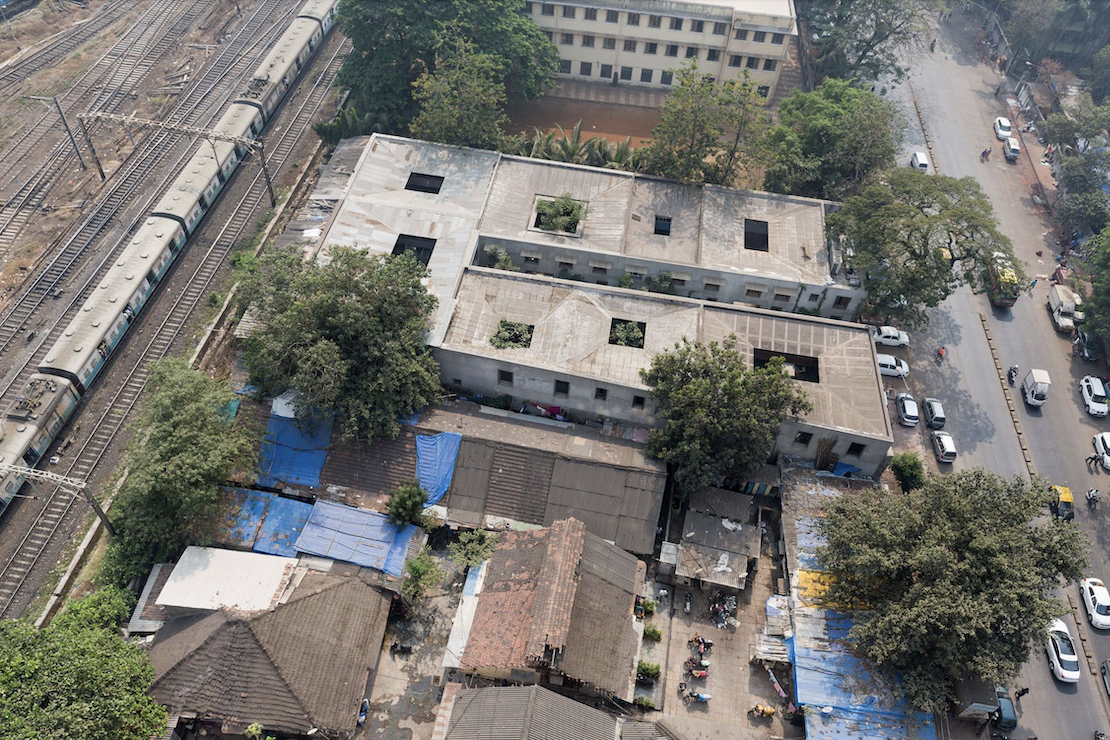
Saat Rasta is Studio Mumbai’s latest urban group housing experiment in Mumbai. Seven friends came together to form an association to build their homes on a narrow and deep plot of land abutting NM Joshi Marg, an arterial city road in south-central Mumbai. In a familiar pattern, this part of the city originally housed several mills. These are now defunct and the area is being redeveloped into shopping malls or towers of luxury housing. The area was once known as girangaon or mill-village, a working-class neighbourhood, vestiges of which remain. A few chawls (a type of housing for migrant workers) and warehouses are still standing. The plot acquired by the association was also occupied by a warehouse which was damaged in a fire, leaving behind the main walls and part of the roof. It remained in disuse and had become ramshackle and overgrown when the association took possession of it. Bijoy Jain of Studio Mumbai is one of its members and the architect for the new development, which also incorporates his own studio.
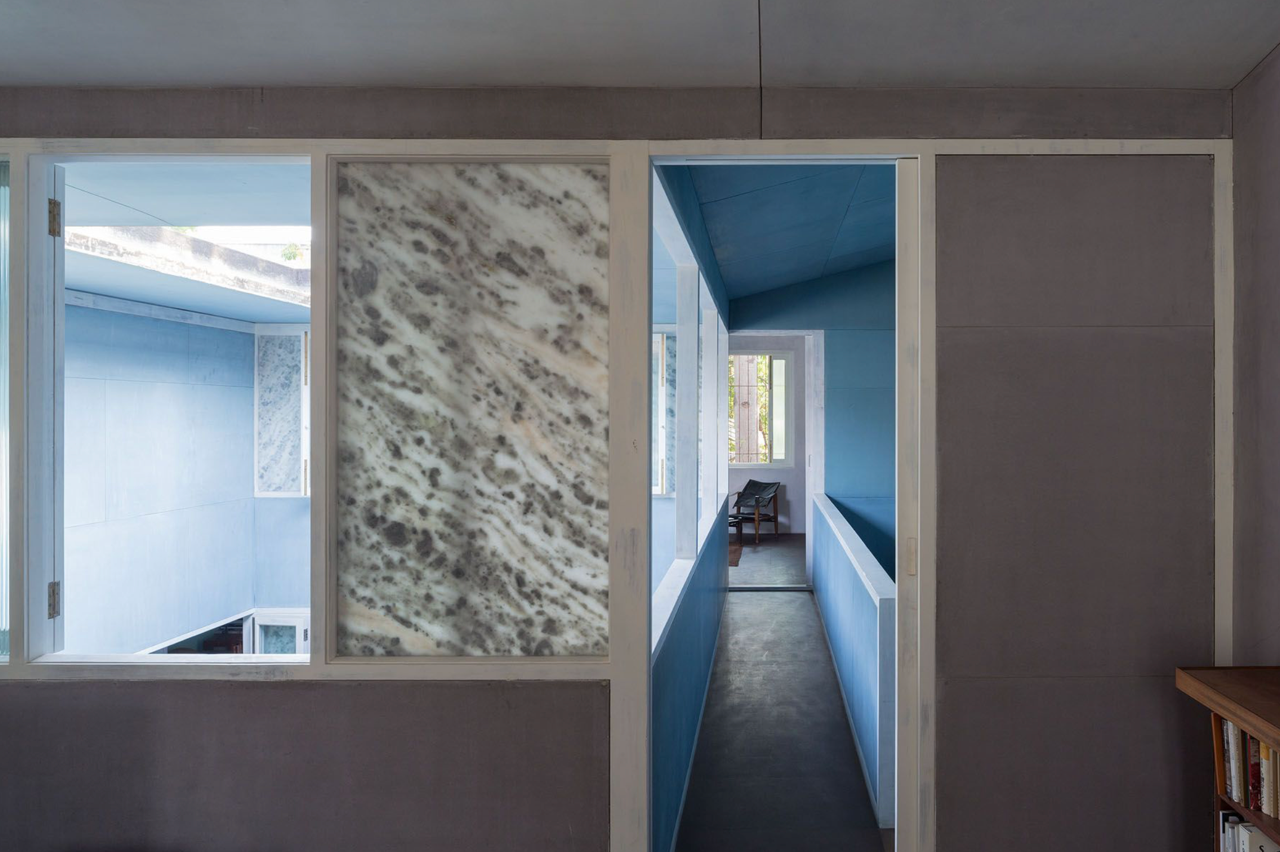
On the face of it, Jain’s scheme is simple and unassuming, yet it is also quite varied and complex in its modulation of space. From NM Joshi Marg, a narrow internal street connects two rows of double-storey houses on either side, ending with the architect’s studio along the axis. The layout follows the footprint of the warehouse, retaining existing setbacks and portions of outer masonry walls, which have been duly repaired. This leaves a set of four parallel walls along the longer side and two on the shorter ends. Onto this template is then grafted a supplementary structural skeleton of concrete. Spaces are subdivided with partition walls to define areas of varying sizes in each of the seven constituent units. Internal spaces in each unit and their inwardly sloped roofs are supported on slender steel and timber frameworks. As well as the outer walls, the new layout also attempts to retain the position of window openings from the original building.
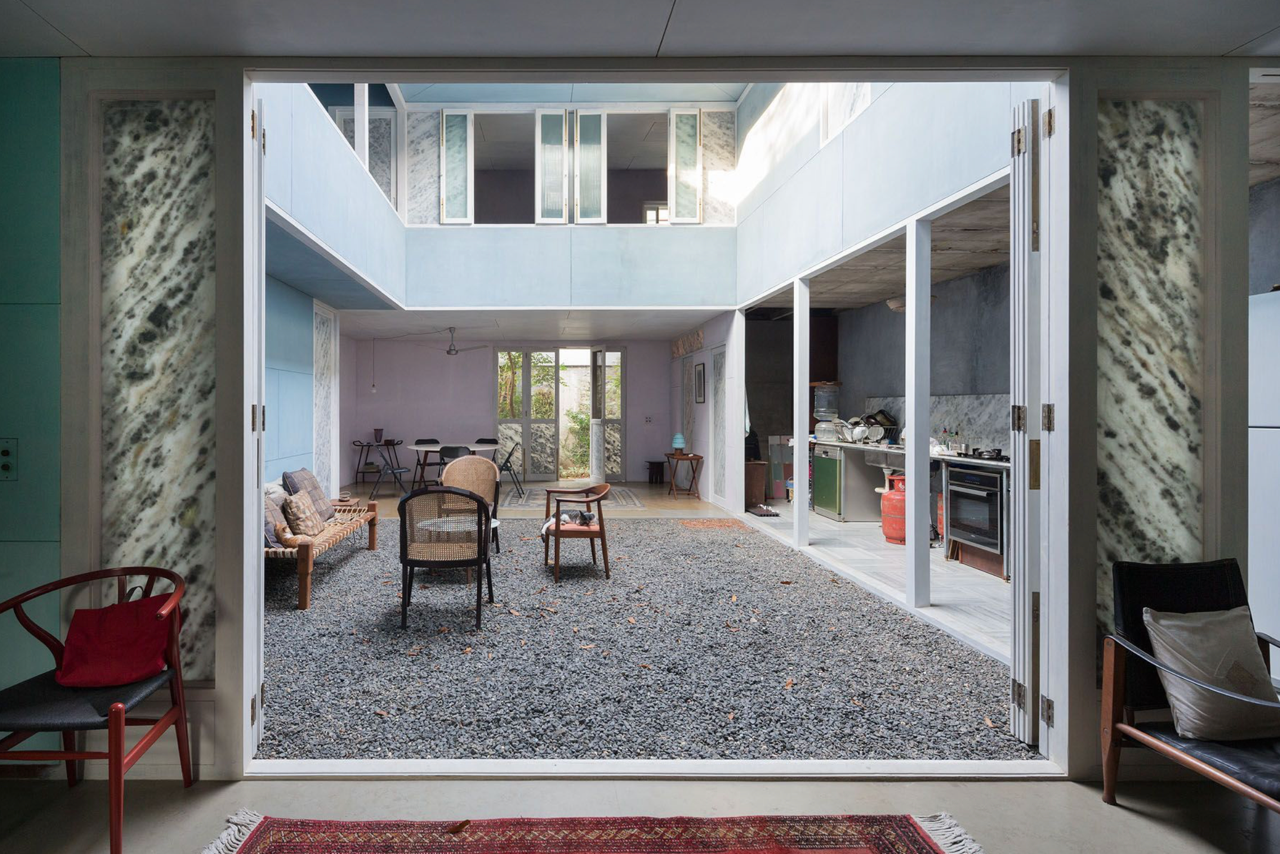
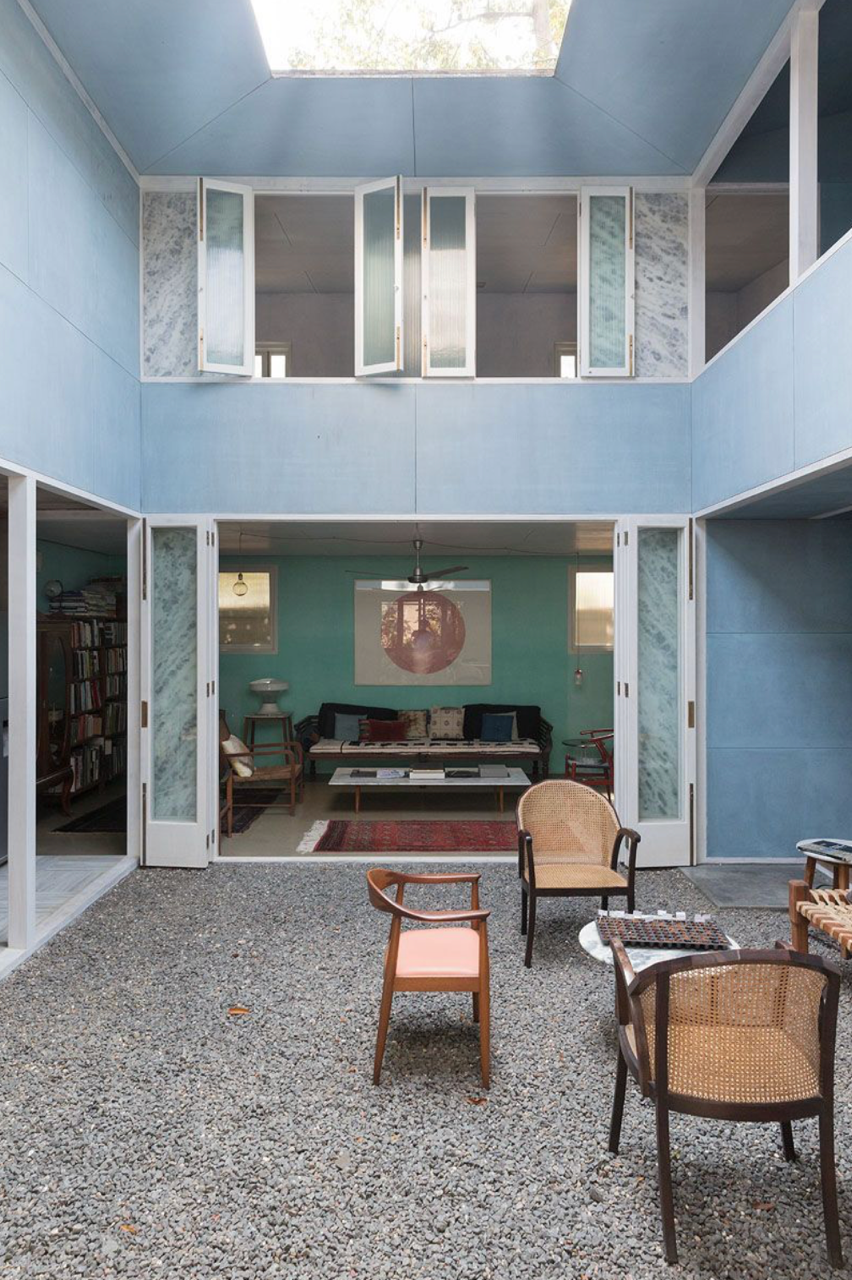
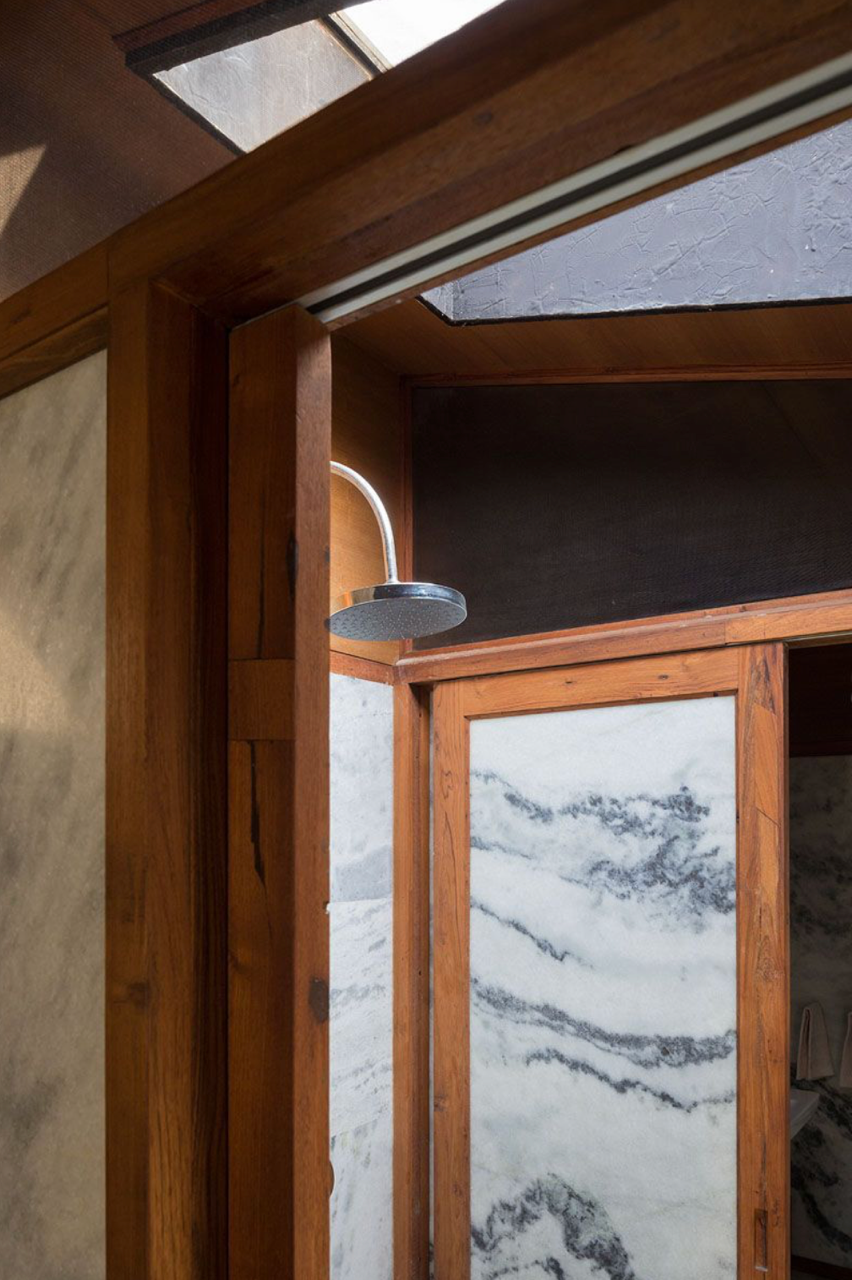
The transformation of a warehouse to city homes is achieved by techniques of adaptive reuse and architectural devices such as a careful layering of space from street to house. Within the armature of the warehouse, each dwelling is arranged around its own courtyard, which is articulated by inward sloping roofs. This roughly rectangular oculus brings in light, air and the torrential monsoon rain, connecting porous ground with sky, a rare and precious quality in a Mumbai home.
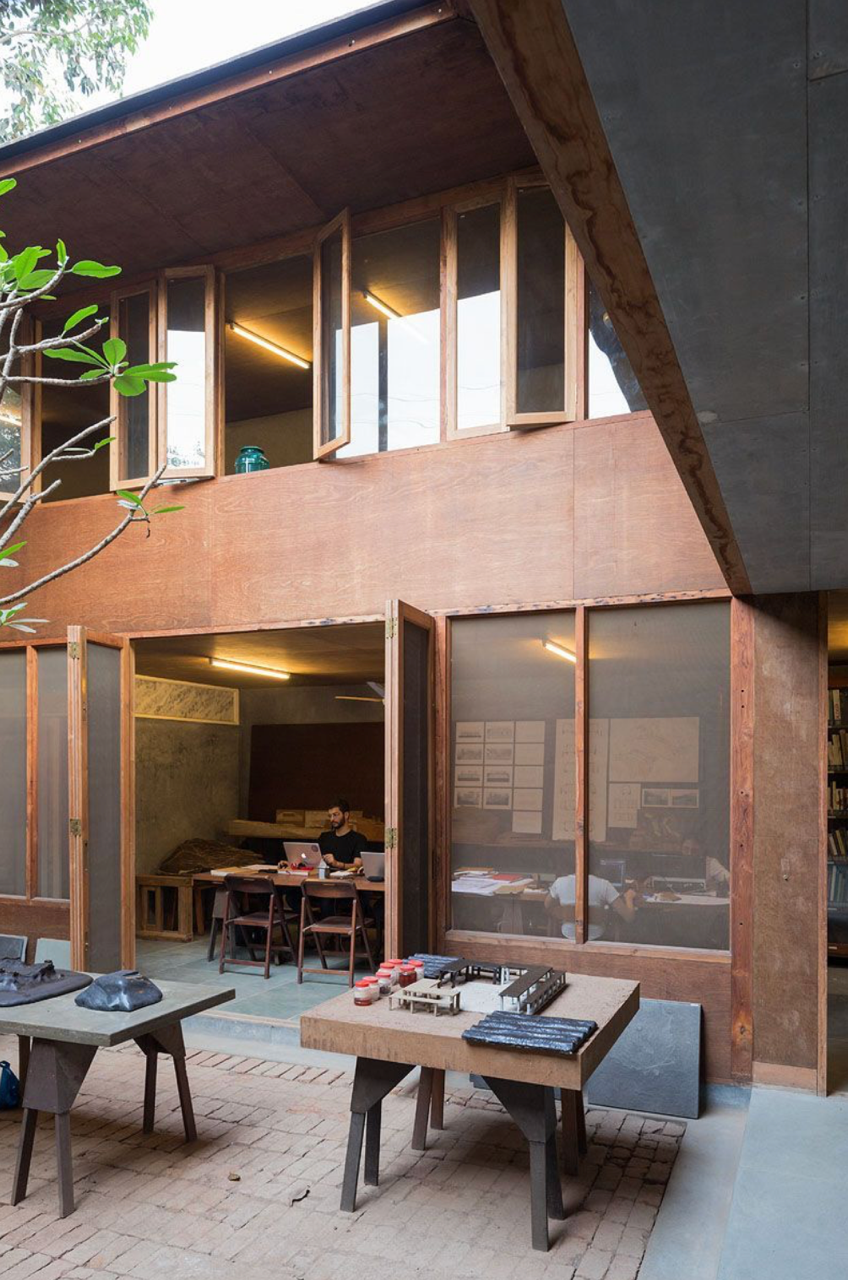
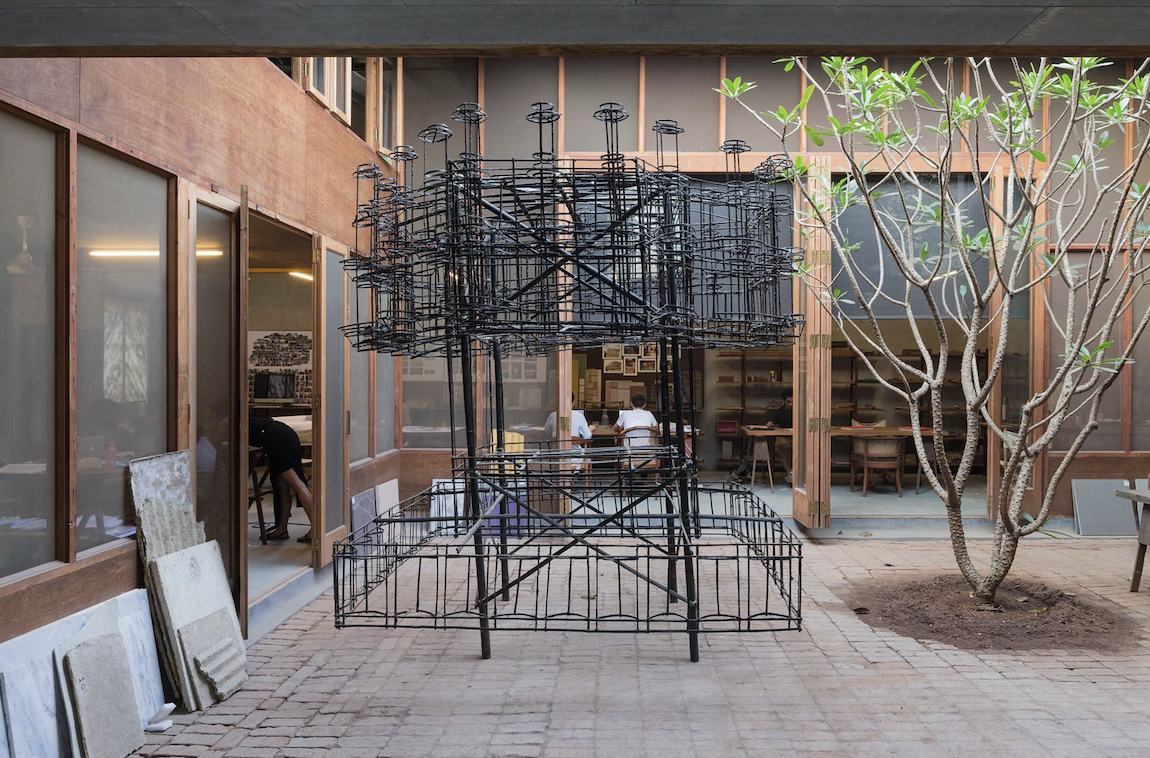
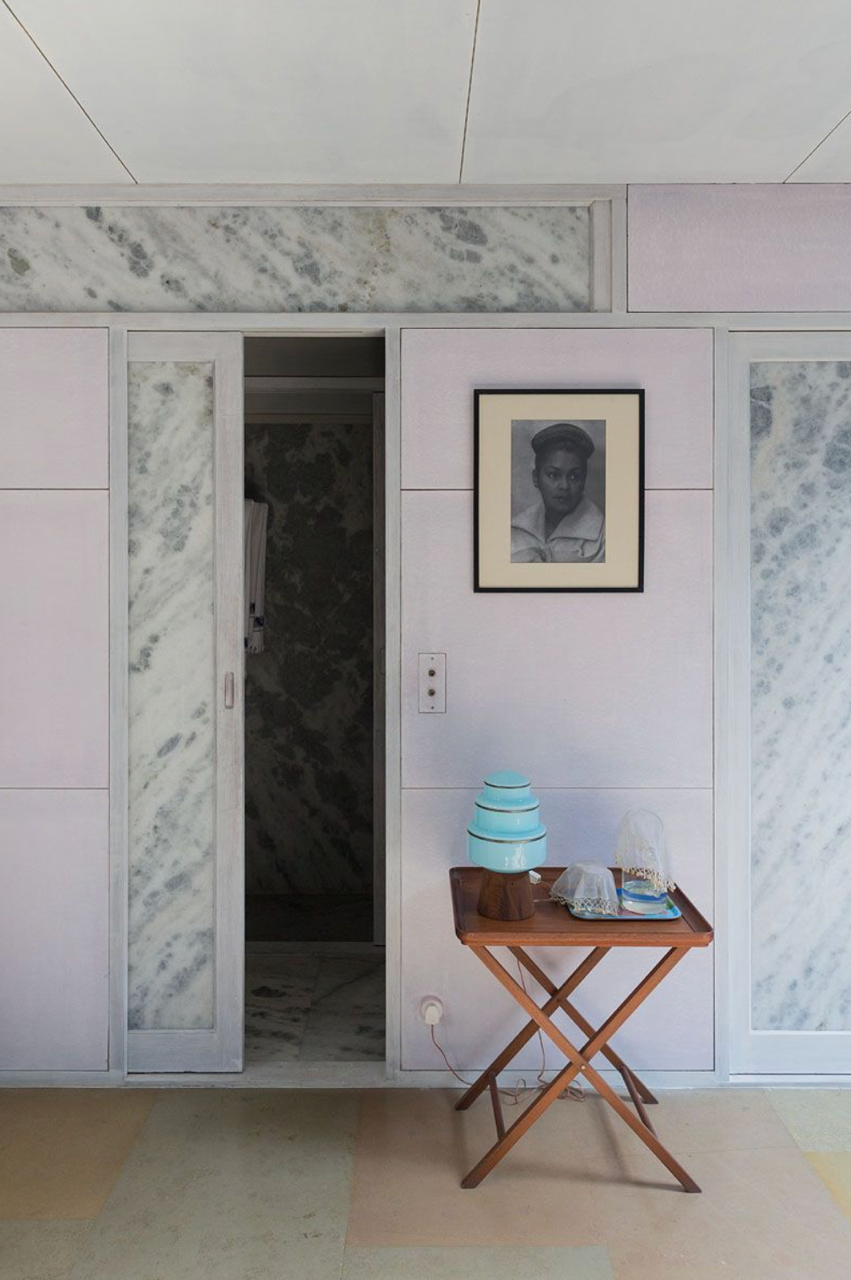
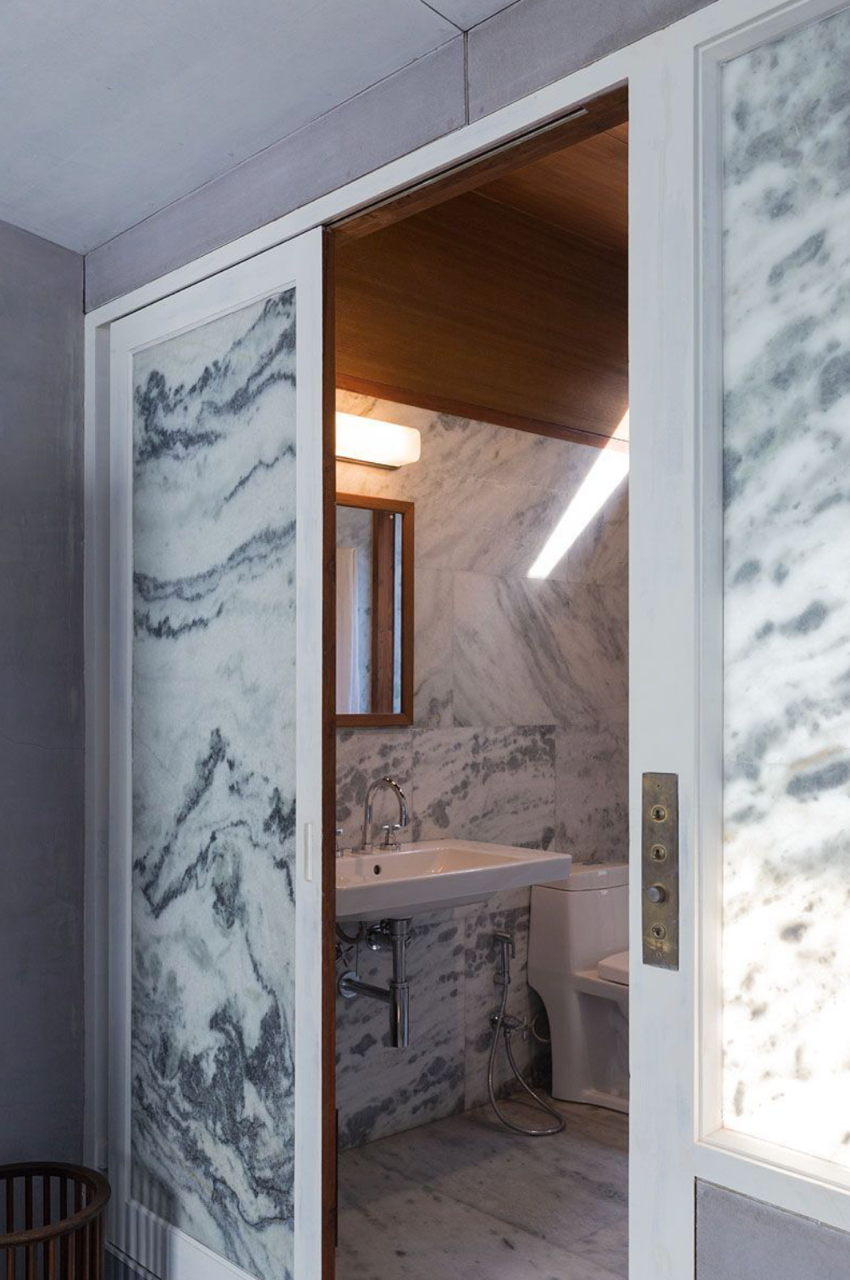
At ground level, multiple shutters can be opened or closed, leaving minimal partitions between fluidly free-flowing spaces. These are defined and articulated by the materiality of surfaces, the quality of light and shadows, and the objects and paraphernalia of life itself. Upper floors contain a more private domain. Jain’s own studio, the largest unit in the layout, also follows this pattern and is organised on two levels around two courtyards.
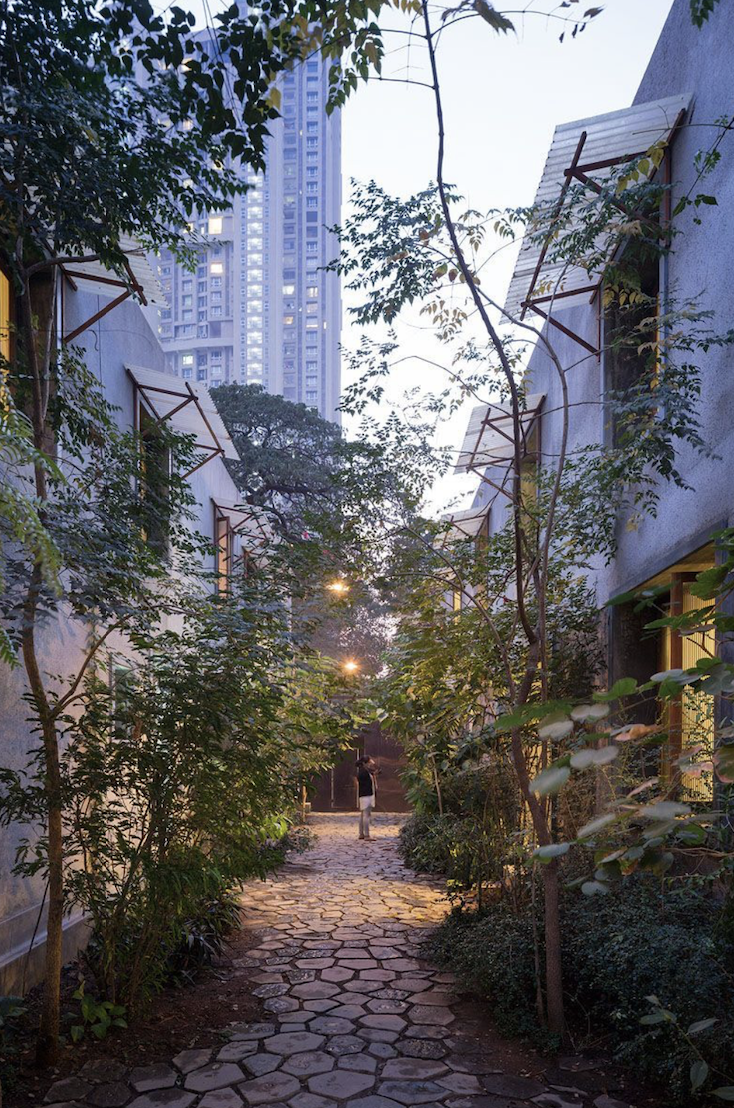
The courtyard in each dwelling not only forms a focus around which domestic spaces may be organised and lit, but also provides visual and spatial links with the internal street. This narrow, spinal street is both simple and beguiling. Linking each house along its way, it constitutes a common public domain that seeps into the entrance of each unit through recessed verandahs and semi-open fenestration. Each dwelling thus displays a varying degree of connection with the wider common parts, and the internal street forms a sheltered, communal space for all the inhabitants. Proportioned roughly 1:2 in cross section, the street is lined with rhythmic window openings protected by lightweight weather-shades. The floor is laid with crazy paving of natural stone and planted on both sides with (consciously designed) un-manicured vegetation. Flowering creepers and small trees conspire to obscure the street facades and filter mellow, dappled light. Altogether this creates a tranquil micro-climate, far removed from the blare of the surroundings.
In this self-developed project, Jain exhibits the same light touch with spaces and sensitive use of materials seen in earlier projects for private houses built outside Mumbai, particularly in the coastal Alibag area. His studio is known for its direct association with people and craftsmen who make and build. This inclusive and intimate way of making architecture is evident here. And building spaces for yourself always prompts the opportunity to reflect on your modus operandi.
For Jain, a project is not an end in itself but rather a framework in search of a universal typology for dwelling. Domesticity is embedded in the workplace, studio, gallery or office. Each programme is more like scaffolding, for there is the possibility of constant rearrangement in the way one occupies space. The private and public can also similarly elide as needed. Jain is interested in exploring porosity too, through air, light, water and built form.
While the Saat Rasta housing is a project nearing completion, what is apparent in this coming together of a collective is an evolving typology of newly built homes, quite unlike any seen in this older part of Mumbai. The milieu is currently dominated by brownfield redevelopment in the form of luxury housing blocks shooting up in the sky with monotonous regularity. Some are as tall as 50 or 60 storeys in height with habitable floors starting only after six or more levels of parking. One such development, Planet Godrej, lies across the road, looming over the Saat Rasta complex. These high-rises have chiefly come about due to outrageously high speculative value of real estate (currently retailing at around 30,000 rupees per square foot; around £370) and each project seeks to make a tradable commodity of every saleable inch.
The idea of creating middle-class homes in this locality, connected to the ground, with a blurring of boundaries between inside and out, where porous transitions allow life to spill over, where doors are open and neighbours are welcome to peep in, harks back to a certain village-like environment that formed the beating heart of the wadis in the mill lands built in the early 20th century. These wadis or low-rise chawls housed migrant workers who could preserve their village-like ethos even if living in small, cramped individual units. Right next to Saat Rasta are the remnants of Chameliwadi and Vinayak Vasudev chawl. In each case, densely packed low-rise housing units are organised along an internal street entered through an open gateway from the footpath outside. Clearly, Jain’s design aims to reconceptualise this typology with a modern, sophisticated and urbane sensibility. Jain has always sought inspiration from the vernacular, not for its outward form, but for its response to space which he understands as tacit or intuitive, displaying a remarkable sense of economy. Although the Saat Rasta housing consists of a few homes of relatively large size and is thus low density, it could be argued that the same form might easily have been subdivided into more dwellings while still retaining its essential character.
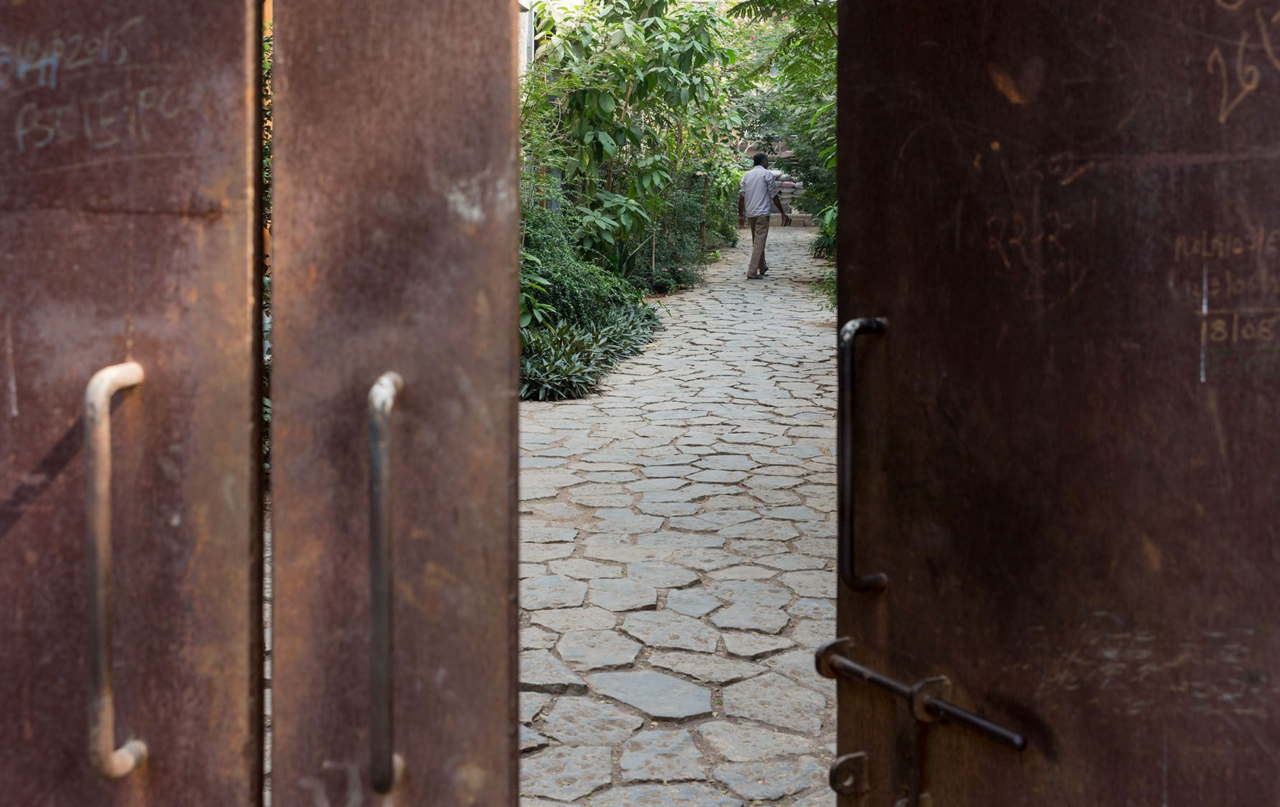
The project is a conscious choice by the collective (the architect being a part of it) to eschew the prevailing ethos of housing redevelopment in Mumbai. This reworking of an older housing trope demonstrates that it is possible to think of contemporary urban housing in the city in terms of the intrinsic human values of co-operative dwelling rather than obsess with exploiting its notional financial value. Yet it also has to be acknowledged that making a choice like this is only possible with the privilege of wealth and is by no means normative. Saat Rasta may refer to the typology of the urban wadi but never completely. It remains a gated community, excluded from the messy yet inclusive main road outside. The shared porosity of its internal street gives it its defining character, but it must retain a massive iron gate that cuts it off from the clutter of the public footpath. In that sense, Saat Rasta is a novel experiment in collective living but in a limited and self-referential context, unable to engage with the street outside in any meaningful way, except to rely on it for its parking needs.